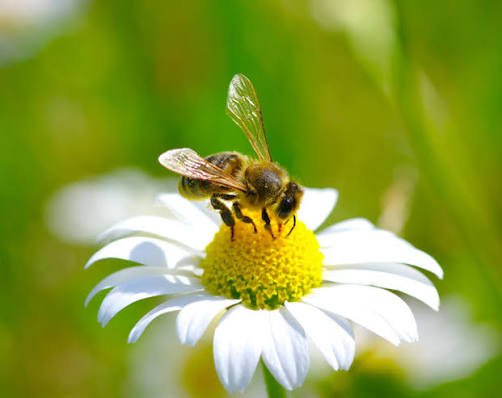

The Bees by Laline Paull is a striking debut novel that transforms the world of a honeybee hive into an imaginative story about power, social class, obedience, freedom, and motherhood. Published in 2014, the novel follows Flora 717, a worker bee born into the lowest caste of her highly controlled hive society.
What makes The Bees especially memorable is its unusual perspective. Instead of observing bees from the outside, readers experience their world from within the hive. Paull combines real honeybee biology with dystopian fiction, creating a society that feels completely alien while still reflecting recognizable aspects of human civilization.
For readers interested in literary fiction, speculative fiction, dystopian novels, or stories involving animal societies, The Bees offers a fascinating reading experience.
What Is The Bees About?
The Bees centers on Flora 717, a sanitation worker belonging to the lowest social class in her hive. From birth, Flora is expected to follow the hive’s fundamental principles of accepting, obeying, and serving. The Queen is revered, and individual identity is largely subordinate to the collective.
Flora, however, is different from the other workers. Her unusual abilities allow her to move through different areas of hive life, taking on responsibilities that would normally be outside her social position.
As her experiences expand, Flora begins discovering that the hive’s seemingly perfect system contains secrets, inequality, violence, and strict controls. Her growing curiosity eventually places her in conflict with the rules that have governed her society for generations.
The Bees and Flora 717
Flora 717 is the heart of The Bees. Her journey is not simply an adventure through a fictional hive; it is an exploration of what happens when an individual begins questioning a system designed to eliminate individuality.
Initially, Flora embraces the values of her society. She believes that serving the Queen and protecting the hive are the highest possible purposes. Yet her experiences gradually challenge that unquestioning loyalty.
Her movement from sanitation work to caring for newborn bees and eventually becoming a forager demonstrates how ability and curiosity can challenge rigid social boundaries.
Flora’s development gives the novel its emotional power. She is courageous, curious, vulnerable, and increasingly willing to challenge rules when they conflict with her deepest instincts.
Themes of Class, Power, and Control
One of the strongest elements of The Bees is its examination of social hierarchy. The hive operates through an elaborate caste system in which different bees have predetermined roles.
This structure creates an obvious parallel with human societies where class, privilege, and institutional authority can determine people’s opportunities. Paull uses the hive to make these concepts feel unfamiliar enough for readers to examine them from a new perspective.
The novel also explores authoritarian control. Individual thought is discouraged, while obedience is treated as a virtue. Those who challenge established rules can face severe consequences.
Through Flora’s experiences, The Bees asks an important question: how much freedom can an individual possess when an entire society is built around collective obedience?
Motherhood and Individual Identity
Motherhood becomes another major theme as Flora’s story develops. Her instincts eventually conflict with the laws of the hive, creating one of the novel’s most significant sources of tension.
The story connects motherhood with individuality because Flora’s feelings force her to consider desires that cannot simply be explained by her assigned role. Her maternal instincts become a powerful challenge to the system surrounding her.
This makes The Bees more than a conventional dystopian story. Beneath its science-fiction setting is a deeply personal story about identity, instinct, sacrifice, and the desire to protect what matters most.
The Role of Real Honeybee Biology
A major strength of The Bees is the way Laline Paull incorporates real aspects of honeybee biology into an imaginative fictional society. Her official author page describes the novel as a thriller set in a beehive and specifically notes its basis in real honeybee biology.
The result is a world where biological behavior becomes the foundation for culture, religion, politics, and social organization. Tasks such as sanitation, nursing, foraging, and reproduction are transformed into elements of the hive’s social system.
This scientific foundation gives the novel a distinctive sense of authenticity while allowing Paull to explore fictional ideas about consciousness and social control.
Why The Bees Stands Out
The Bees stands apart from many dystopian novels because its entire story takes place within a beehive. This unusual setting gives Paull an opportunity to examine familiar human concerns through a completely different lens.
Publishers Weekly described the novel as a combination of dystopian fiction and natural-history observation, highlighting the way its bee society reflects recognizable questions about authoritarianism and collective behavior.
The novel also received significant literary recognition. It was shortlisted for the 2015 Baileys Women’s Prize for Fiction and longlisted for the Desmond Elliott Prize for New Fiction.
Readers looking for more information about Laline Paull can visit her official author website, while readers interested in the book’s publication details can consult Google Books.
Is The Bees Worth Reading?
For readers who enjoy imaginative world-building, The Bees is an unusual and thought-provoking choice. Its premise is immediately distinctive, but the novel’s real strength lies in how successfully it turns bee biology into a framework for discussing human concerns.
The story can appeal to fans of dystopian fiction because of its authoritarian society, but it also works as literary fiction because of its attention to identity, relationships, social expectations, and moral choices.
The book may not be ideal for readers looking for a lighthearted animal story. Its world contains violence, fear, rigid social control, and difficult questions about survival. Nevertheless, these darker elements contribute to its compelling atmosphere.
FAQs About The Bees
Who wrote The Bees?
The Bees was written by Laline Paull and published as her debut novel in 2014.
Who is Flora 717?
Flora 717 is the novel’s central character. She begins as a sanitation worker from the lowest caste but gradually takes on increasingly important roles within her hive.
What genre is The Bees?
The Bees combines dystopian fiction, science fiction, literary fiction, and elements of thriller storytelling. Its fictional society is inspired by real honeybee biology.
What is the main theme of The Bees?
The novel explores social hierarchy, obedience, individual identity, power, motherhood, sacrifice, and the tension between personal instincts and collective expectations.
Is The Bees based on real bees?
The novel incorporates real honeybee biology, but its society and characters are fictional. Paull uses biological behaviors as inspiration for her imaginative dystopian world.
Conclusion
The Bees by Laline Paull is an inventive dystopian novel that turns the structure of a honeybee colony into a powerful examination of society and individuality. Through Flora 717, readers encounter a world where caste determines opportunity, obedience is celebrated, and questioning authority can be dangerous.
What makes The Bees particularly effective is the combination of biological inspiration and human themes. Class, power, motherhood, freedom, and identity become more striking when viewed through the unfamiliar world of the hive.
For anyone seeking an original speculative novel with an unusual setting and meaningful social commentary, The Bees remains a fascinating and thought-provoking read.